
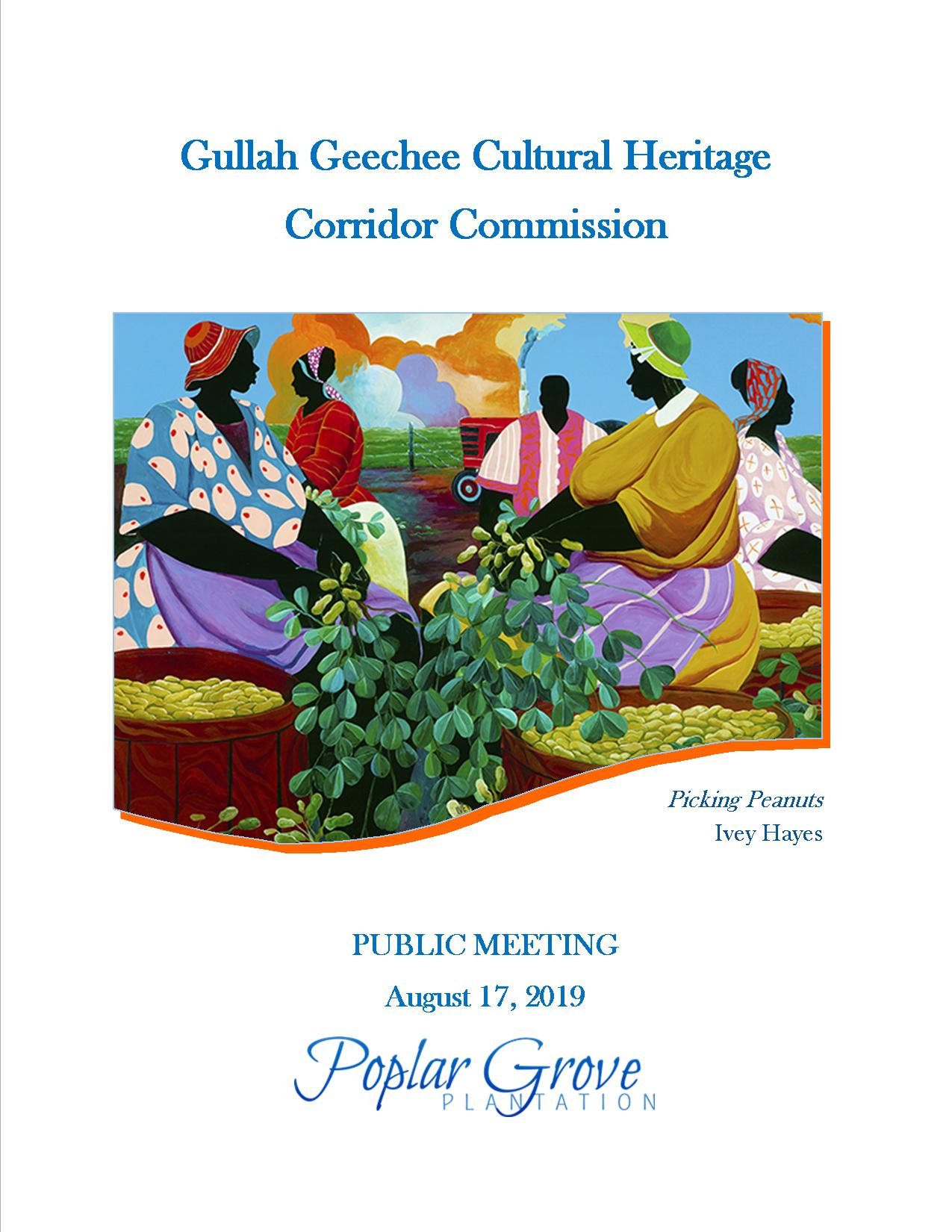
Gullah Geechee Corridor
Poplar Grove, on the National Register of Historic Places and within the Gullah Geechee Cultural Heritage Corridor established by the National Park Service, reflects the traditions of a diverse community of enslaved people in southeastern North Carolina — in what became Pender County during Reconstruction.

The site offers a culturally rich opportunity to explore Gullah Geechee history through the families whose agricultural skills — cultivating indigo, peanuts, and sweet potatoes — and heritage arts of basketry, weaving, and blacksmithing enriched the region. North of Wilmington, enslaved communities produced peanuts (the Gullah word “goober”); to the south, rice, or Carolina Gold.
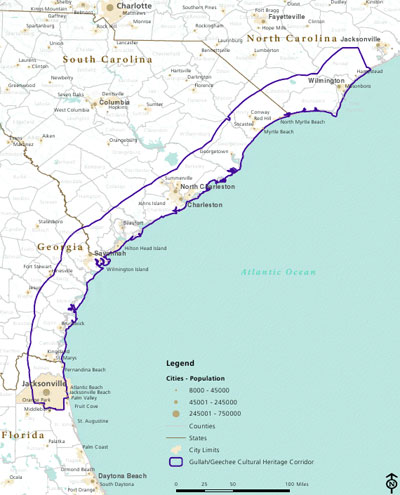
What is the Gullah Geechee Corridor?
The Corridor encompasses a cultural and linguistic area along the southeastern coast of the United States, from the northern border of Pender County, North Carolina, to the southern border of St. Johns County, Florida, and 30 miles inland — home to one of the country’s most unique cultures, first shaped by enslaved Africans from the rice-producing regions of West and Central Africa.
Who are the Gullah Geechee People?
Gullah Geechee people are direct descendants of Africans brought to the United States and enslaved for generations. Their diverse African roots and the isolated nature of their enslavement created a unique, surviving culture — visible in distinctive arts, crafts, cuisine, music, and the Gullah Geechee language. (Quotations drawn from the National Park Service and the Gullah Geechee Cultural Heritage Corridor Commission Management Plan.)
This section is continually updated as research continues. — Caroline C. Lewis, Executive Director.